
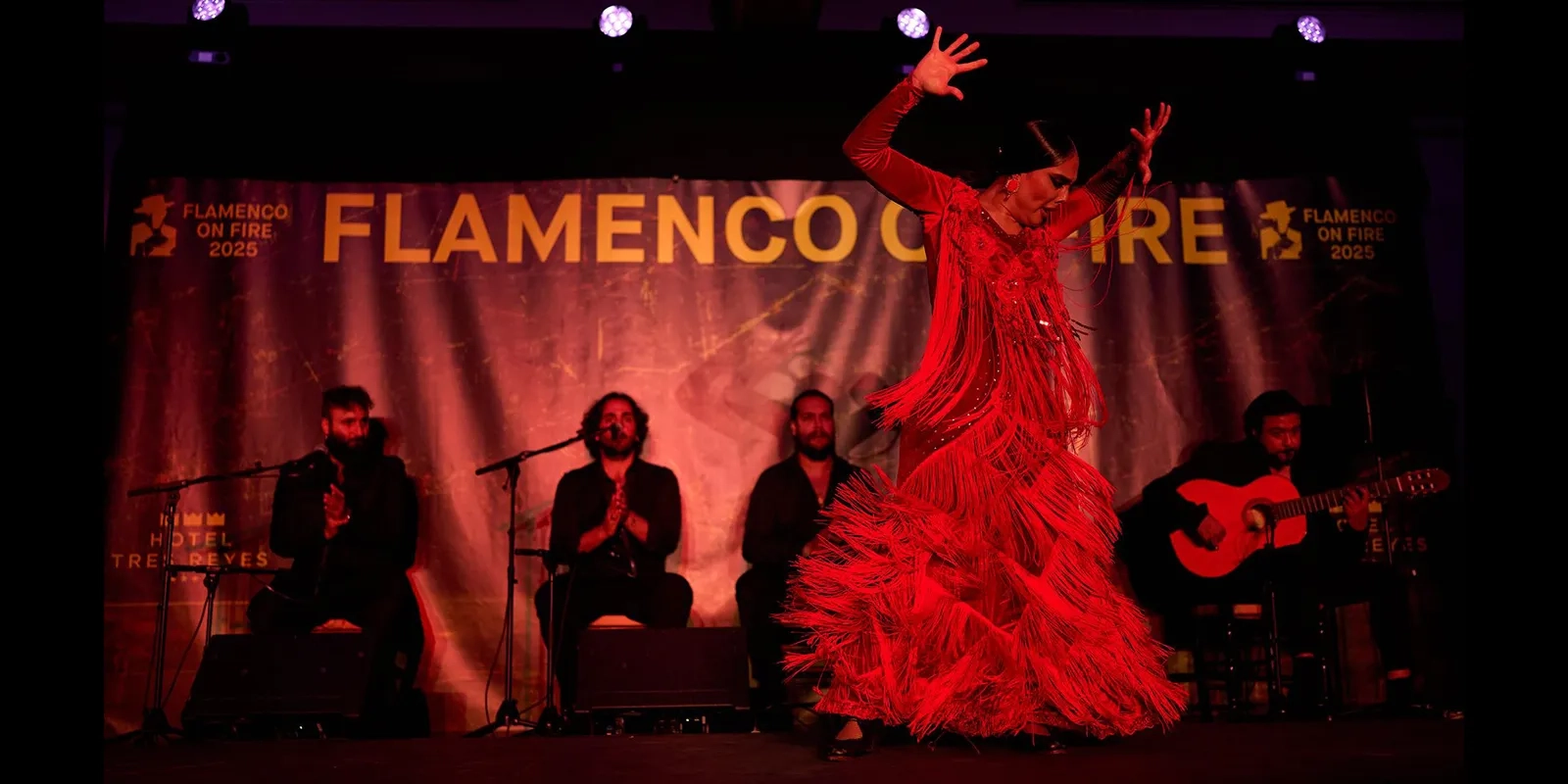
Every summer, flamenco finds new stages across Spain, bringing together artists, scholars and audiences to celebrate one of the country’s most treasured cultural expressions. Among these events, Flamenco on Fire has established itself as one of the most innovative festivals in the national flamenco calendar.
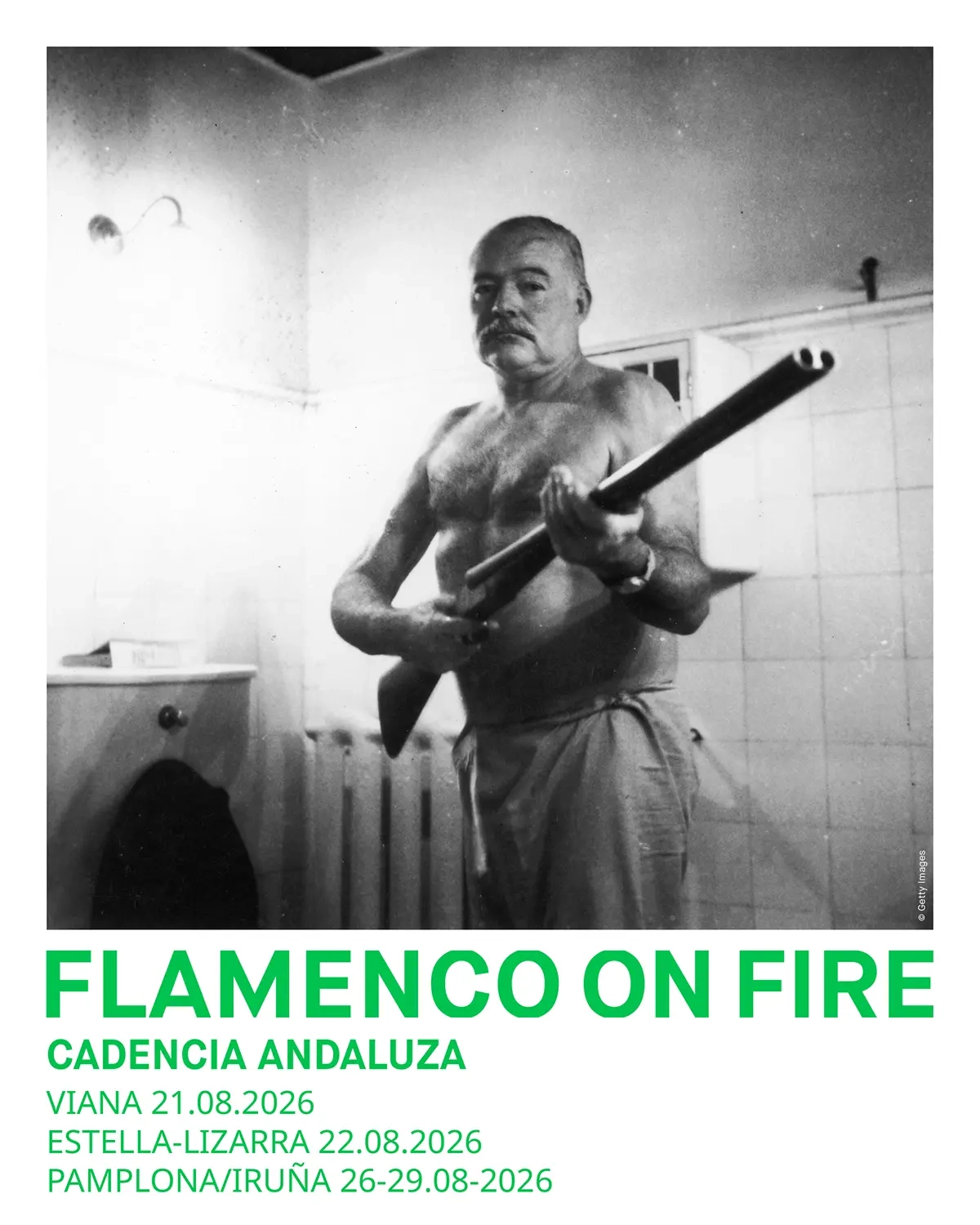
From 21–29 August 2026, the cities of Viana, Estella-Lizarra and Pamplona will host the festival’s twelfth edition, continuing its ambitious historical trilogy, Una historia del flamenco. This year’s theme, Cadencia Andaluza (1925–1950), invites audiences to explore one of the most transformative periods in flamenco history—a time when the art form expanded from intimate cafés cantantes into theatres, public venues and larger audiences while developing many of the artistic languages we recognise today.
A Dialogue Between Tradition and Innovation
The phrase Cadencia Andaluza refers to one of flamenco’s most recognisable harmonic progressions, heard throughout countless forms of cante, toque and baile. More than a musical sequence, it represents continuity—a thread connecting generations of artists who have shaped flamenco through their creativity and dedication. This year’s festival uses that musical foundation as a symbol of flamenco’s journey: honouring its roots while embracing new artistic voices and contemporary interpretations.
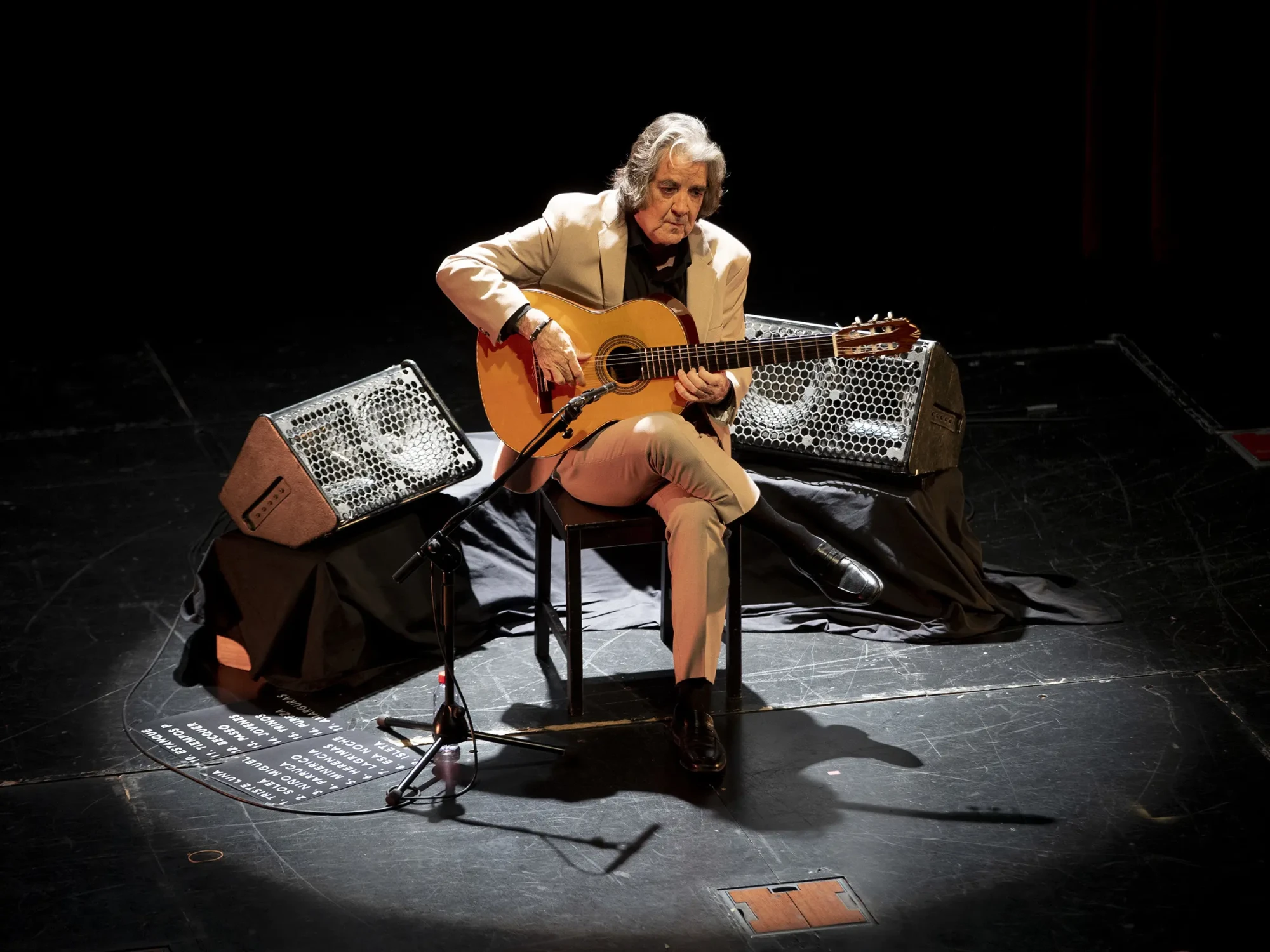
The programme brings together celebrated artists including José Mercé, Mayte Martín, Manuel Liñán, Rafael Riqueni, Rosario La Tremendita, Yerai Cortés and many others, alongside emerging performers who continue to redefine the possibilities of flamenco without losing sight of its traditions. Concerts, street performances, educational activities and cultural encounters transform the historic cities of Navarra into living stages where flamenco is experienced in theatres, plazas, balconies and heritage buildings.
Why This Matters ?
For museums dedicated to flamenco, festivals such as Flamenco on Fire remind us that flamenco is not only something to preserve—it is something that continues to grow.
The history of flamenco has always been one of movement, exchange and evolution. Every generation has contributed its own voice while remaining connected to those who came before. The period explored by this year’s festival was particularly significant, as artists expanded the reach of flamenco and introduced it to broader audiences, laying the foundations for many of today’s performance traditions.
At the Museo del Baile Flamenco, we believe that understanding this history enriches every performance we witness today. Every step, every compás, every guitar phrase and every sung verse carries the memory of generations who transformed personal expression into a universal cultural language.